If you’re experiencing any of the following you might want to consider craniosacral therapy:
- fibromyalgia,
- chronic fatigue syndrome,
- sleep issues (difficulty getting to sleep, staying asleep or waking unrefreshed),
- migraine and headaches,
- IBS,
- joint pains, especially those which are chronic and difficult to resolve,
- anxiety,
- low mood or lack of energy.
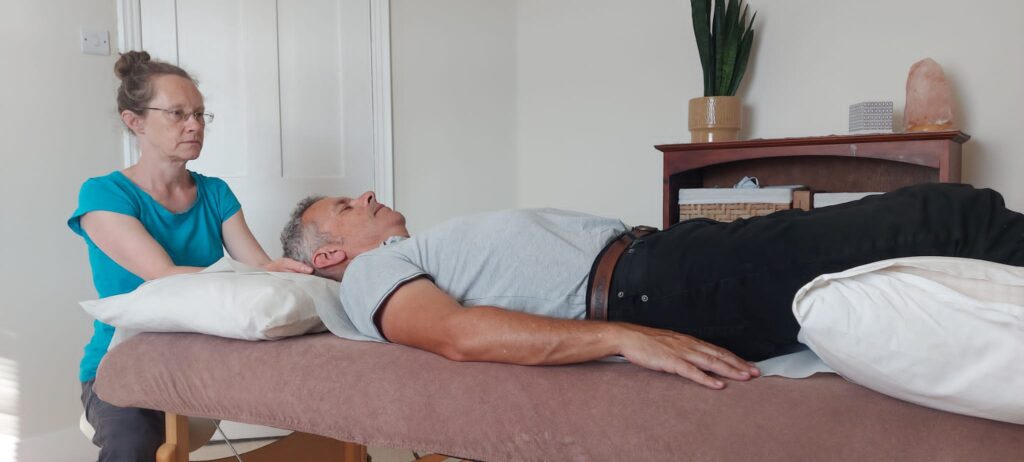
Biodynamic craniosacral therapy (BCST) is a hands-on therapy but using a very light touch – less is definitely more in cranial work. The client lies on a couch or sits in a chair, fully clothed. I use a light touch to hold different parts of the client’s body, often the feet, head and spine but other holds are common – the name “craniosacral” comes from the cranium (part of the head) and the sacrum which is the triangular bone at the base of the spine. Through these holds I can connect with client’s internal systems and the subtle movements and rhythms of fluids and tissues. This non judgemental touch helps to encourage the regulation of the client’s nervous system and thereby to support and encourage their innate health, balance and wholeness. Clients tell me that the process enables them to feel heard and held at a very deep level. I encourage the client during the hands on part of the session to connect with how their their body feels in the moment. The sessions are a unique opportunity to explore sensing, or sensing better, how our bodies really feel.
BCST is a complementary therapy which emerged from osteopathy in the last century. But unlike osteopathy which often involves physical manipulations, BCST involves no manipulations at all. The practitioner simply holds the client’s body at various places and by being very present, neutral and still is able to tune into the fluid rhythms and drives of their own and the client’s body.
There is something in this experience, which is novel for many people, that it enables the body to feel safe and so to switch off, or turn down, the many chemical mechanisms of defence or reaction, such as stress hormones, which we tend to be living with in modern life.
Clients have said to me in recent sessions:
Craniosacral work is rarely an instant fix – I generally find that clients have been living with health problems for some time before coming to me so it’s likely to take a while to help support a return to full health. I suggest booking an initial session, from which you’ll know whether craniosacral therapy is something you want to explore further. If you want to take things further then I often suggest having a further five weekly or fortnightly sessions after which we can review your progress and consider whether you want to have further sessions and, if so, how frequently.
Sessions cost £60 and last 60 minutes. Appointment info is on the appointments page of my website.